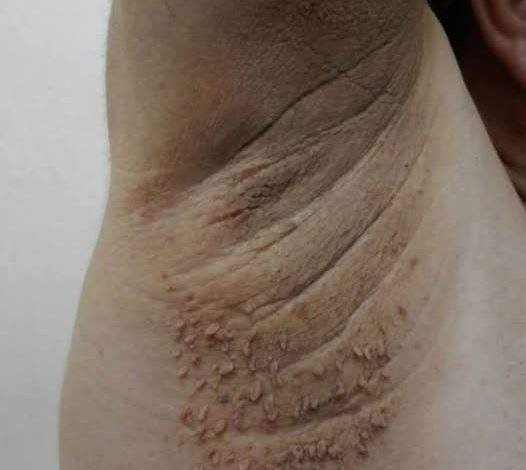
Most people assume it’s dirt.
They scrub harder.
They try different soaps.
Some even think it’s poor hygiene.
But doctors say those dark patches appearing on the back of the neck may be something far more important.
In fact, they could be one of the earliest warning signs that your body is struggling to regulate blood sugar levels.
And many people don’t realize it until years later.
The Dark Patch That Shouldn’t Be Ignored
A medical doctor recently sparked widespread discussion online after sharing photos of a common skin condition that many people mistake for dirt.
The condition is called Acanthosis Nigricans.
It often appears as dark, thick, velvety patches of skin, most commonly on:
- The back of the neck
- Under the arms
- The groin area
- Skin folds and creases
Unlike ordinary dirt or dead skin buildup, these patches usually do not disappear with washing or scrubbing.
That’s because they aren’t caused by poor hygiene.
They’re often linked to what’s happening inside the body.
Why Doctors Pay Attention to It
Health experts say Acanthosis Nigricans is frequently associated with insulin resistance, a condition in which the body’s cells stop responding properly to insulin.
When this happens, blood sugar becomes harder to control.
Over time, insulin resistance can increase the risk of developing:
- Prediabetes
- Type 2 diabetes
- Metabolic syndrome
- Obesity-related health complications
For some people, the skin changes may appear years before diabetes is diagnosed.
That’s why doctors consider it an important warning sign that deserves medical attention.
Children Can Develop It Too
One of the biggest concerns is that the condition can appear in children and teenagers.
Experts note that overweight children who develop these dark patches may have a higher risk of eventually developing Type 2 diabetes.
Parents are encouraged to pay attention if they notice skin changes that:
Do not improve with normal washing
Early medical evaluation can help identify potential problems before they become more serious.
But There’s Something Important You Should Know
Not every dark patch on the neck means diabetes.
Several other skin conditions can look very similar.
One example is Terra Firma-Forme Dermatosis (TFFD), a harmless skin condition that can create brown or black patches resembling dirty skin.
Unlike Acanthosis Nigricans, TFFD often improves when the area is gently cleaned with 70% isopropyl alcohol.
This is why self-diagnosing based on photos online can be misleading.
Only a healthcare professional can determine the true cause.
Other Symptoms Worth Watching For
If dark neck patches appear alongside symptoms such as:
- Increased thirst
- Frequent urination
- Unexplained fatigue
- Blurred vision
- Unexpected weight changes
Doctors recommend scheduling a medical evaluation as soon as possible.
These symptoms may indicate blood sugar problems that require further testing.
What Should You Do If You Notice These Patches?
The good news is that identifying the issue early can make a significant difference.
Healthcare professionals typically recommend:
- Having blood sugar levels checked
- Maintaining a healthy weight
- Following a balanced diet
- Staying physically active
- Monitoring any changes in the skin
Many pharmacies and clinics can perform simple blood glucose screenings if you’re concerned.
The Bottom Line
A dark patch on the neck isn’t always just dirt.
And it isn’t always diabetes either.
But because conditions like Acanthosis Nigricans can sometimes signal underlying health issues, it’s worth paying attention.
The safest approach is simple:
If you notice unusual skin changes that don’t go away, don’t ignore them.
A quick medical checkup can provide answers, peace of mind, and, if necessary, early treatment before more serious problems develop.
Sometimes your skin notices a health problem before the rest of your body does.